Introduction
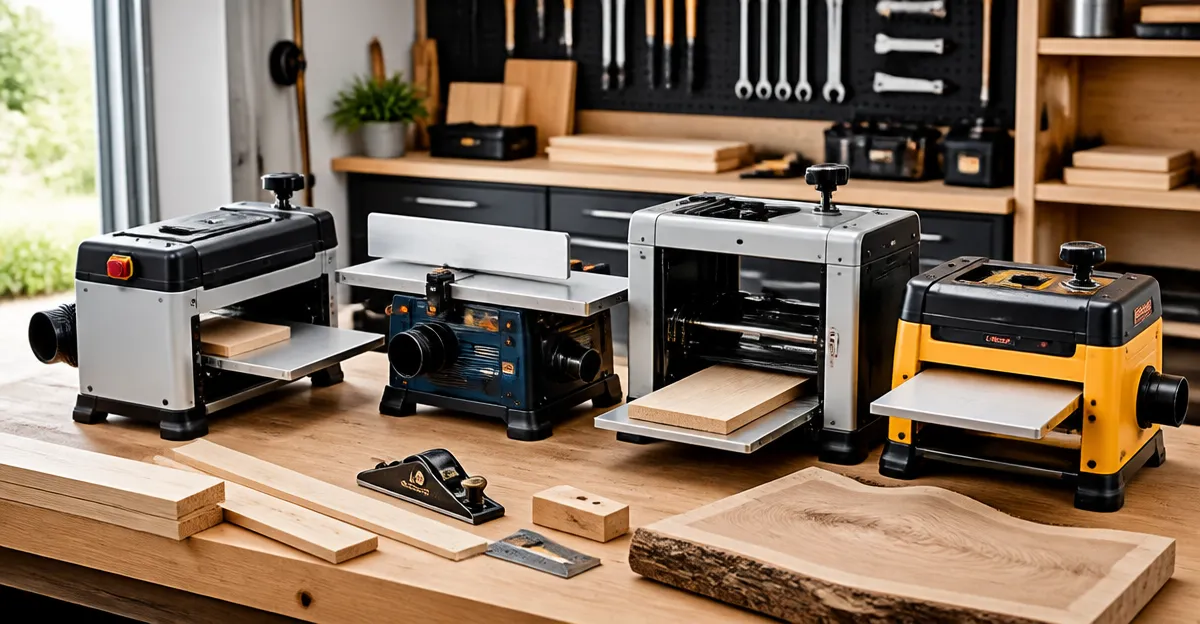
Working in a small garage often means making tough decisions about which tools can fit without crowding the workspace. This guide examines the most effective benchtop planers that balance power, precision, and footprint, allowing hobbyists and professionals alike to achieve flawless surfaces in limited space. Readers will learn essential concepts, compare key specifications, and receive actionable advice for selecting, using, and maintaining a planer that does not dominate the shop floor. By the end of the article, one will be equipped to choose a machine that maximizes productivity while preserving valuable square footage.
Background/Context
A benchtop planer removes material from the face of a board, creating uniform thickness and a smooth finish. The core components include a motor, cutterhead (typically three‑knife or spiral), infeed/outfeed tables, and a dust‑extraction system. In a confined garage, the planer’s dimensions, weight, and noise level become as important as its cutting capacity. Understanding how feed speed, cuts per inch (CPI), and knife life interact helps users match a tool to the type of lumber they plan to process, whether soft pine pallets or dense hardwoods.
Choosing the Right Planer for a Small Garage
When space is at a premium, three criteria dominate the decision‑making process: physical footprint, power-to-weight ratio, and dust‑management efficiency. A compact base and foldable tables reduce the occupied area, while a robust motor ensures the machine can handle occasional hardwood without stalling. Effective dust extraction not only keeps the garage clean but also minimizes health hazards associated with fine wood particles.
Below are the primary categories to evaluate, followed by product recommendations that excel within each area.
1. Footprint and Portability
Planers that feature folding infeed/outfeed tables or detachable stands provide the flexibility to store the unit against a wall when not in use. The VEVOR 13‑Inch Thickness Planer includes a foldable iron stand and compact dimensions, making it a strong candidate for cramped environments. Similarly, the WEN PL1326 offers a lightweight cast‑iron base that can be bolted to a workbench, allowing the planer to disappear when the job is finished.
2. Power and Cutting Performance
For occasional hardwood work, a motor rated at 15 A with a cutterhead speed of 10,000 RPM provides sufficient torque. The DEWALT DW735X delivers a 15 Amp, 20,000 RPM motor and a three‑knife head that yields 30 % longer knife life, making it ideal for users who demand durability. The DEWALT DW734 offers comparable power in a slightly smaller 12½‑inch format, providing flexibility for tighter bench spaces.
3. Dust Collection and Cleanliness
Effective chip ejection prevents buildup on the cutterhead and reduces the frequency of cleaning. The DEWALT DW735X incorporates a fan‑assisted chip evacuation system that throws debris away from the work area. The VEVOR model includes a 1.8‑inch dust‑exhaust port compatible with standard dust collectors, while the WEN PL1303 features dual dust ports for enhanced chip removal.
4. Price‑to‑Performance Ratio
Budget‑conscious woodworkers often weigh initial cost against long‑term value. The VEVOR planer is priced at $306.99 and still offers a 15 Amp motor, making it the most affordable option with respectable performance. The WEN PL1303 sits at $337.07, delivering a 15 Amp motor and three reversible blades at a modest price. For those willing to invest more for premium features, the DEWALT DW735X commands $699.00 but rewards users with superior build quality, longer knife life, and a three‑year limited warranty.
Comparison/Selection Guide
| Feature | DEWALT DW735X | VEVOR 13‑Inch | DEWALT DW734 | WEN PL1326 | WEN PL1303 |
|---|---|---|---|---|---|
| Motor Power | 15 A, 20,000 RPM | 15 A, 1,800 W, 8,000 RPM | 15 A, 20,000 RPM | 15 A, 10,000 RPM | 15 A, 30,000 CPM |
| Cutting Width | 13 in. | 13 in. | 12½ in. | 13 in. | 13 in. |
| Maximum Thickness | 0.2‑6.3 in. | 0.2‑6.3 in. | 0.2‑6.3 in. | 6 in. | 6 in. |
| CPI (Cuts per Inch) | 96 / 179 (two‑speed) | Not specified | 96 | Not specified | Not specified |
| Dust Port | Fan‑assisted chip ejection | 1.8 in. dust exhaust | Standard dust port | Adjustable dust port | Two dust ports (2.5‑in. & 4‑in.) |
| Price (USD) | 699.00 | 306.99 | 549.00 | 524.99 | 337.07 |
| Amazon Rating | 4.7/5 (7,490 reviews) | 4.4/5 (262 reviews) | 4.6/5 (2,758 reviews) | 4.7/5 (729 reviews) | 4.4/5 (257 reviews) |
The table above highlights the strengths of each model, allowing readers to match a planer to their specific garage constraints and project requirements. Those who prioritize durability and minimal maintenance should gravitate toward the DEWALT DW735X, while users seeking a budget‑friendly yet capable machine may find the VEVOR or WEN PL1303 more appealing.
Best Practices & Tips
- Measure the available bench space before purchasing; allow at least 12 inches of clearance behind the outfeed table for board egress.
- Set the cutterhead speed according to wood density: use the slower 96 CPI setting for hardwoods and the faster 179 CPI for softwoods to reduce burn.
- Install a dedicated dust collector or a cyclone system to keep chips from accumulating on the cutterhead; this prolongs knife life and maintains surface quality.
- Always engage the carriage lock before feeding the board to minimize snipe, especially on the first and last passes.
- Periodically sharpen or replace knives; three‑knife systems like those on DEWALT models provide interchangeable blades that simplify maintenance.
Frequently Asked Questions
- Can a benchtop planer handle 2×6 lumber? Yes, provided the machine’s maximum width exceeds 6 inches and the infeed/outfeed tables are long enough to support the board. All featured planers accept 13‑inch width, which comfortably accommodates 2×6 stock.
- What is the ideal feed speed for a small garage? A feed speed of 6 m/min (approximately 236 in/min) offers a balance between efficiency and reduced vibration. The VEVOR planer advertises this speed, making it suitable for compact workshops.
- Do I need a separate power outlet? Most 15 A planers draw up to 1800 W, which may trip a standard 15 A circuit if other tools are running simultaneously. It is advisable to use a dedicated 20 A circuit to avoid overload.
- How often should I replace the knives? Knife life varies with wood type; softer species may allow dozens of passes, while hardwoods can dull knives after a few hundred passes. Reversible knives, as found on the DEWALT DW734, can be flipped to double their usable life.
- Is noise a major concern? Planers generate sound comparable to a table saw. Using hearing protection and situating the planer against a solid wall can mitigate noise impact in a garage setting.
- Can I use the planer for jointing? While a planer can flatten one face, it is not a true jointing machine. For occasional jointing, a planer with a sturdy carriage lock and consistent feed can suffice, but dedicated jointers provide superior edge straightness.
- What maintenance tasks are essential? Regularly clean the chip ejection fan, check the dust port for clogs, and verify that the infeed/outfeed tables remain level. Lubricating the feed rollers monthly helps maintain smooth operation.
Conclusion
Selecting a benchtop planer for a small garage requires balancing size, power, dust management, and cost. The DEWALT DW735X stands out for professional‑grade durability, while the VEVOR 13‑Inch offers an economical entry point without sacrificing essential performance. Mid‑range options such as the WEN PL1326 and PL1303 deliver respectable results for hobbyists who value portability and ease of maintenance. By applying the best‑practice tips and referencing the comparison guide, woodworkers can confidently invest in a planer that enhances productivity without overwhelming limited space.
Products Featured in This Guide
DEWALT DW735X
Price: $699.00 | Rating: 4.7/5 (7,490 reviews)
Featured for its robust 15 A motor, three‑knife head with extended knife life, and built‑in fan‑assisted chip ejection, making it ideal for users who require high performance in a compact footprint.
VEVOR 13‑Inch Thickness Planer
Price: $306.99 | Rating: 4.4/5 (262 reviews)
Featured for its affordable price, foldable iron stand, and 1.8‑inch dust‑exhaust port, offering a space‑saving solution for budget‑conscious woodworkers.
DEWALT DW734
Price: $549.00 | Rating: 4.6/5 (2,758 reviews)
Featured for its slightly smaller 12½‑inch width, durable three‑knife cutterhead, and excellent long‑term reliability, fitting tighter bench spaces while maintaining professional performance.
WEN PL1326
Price: $524.99 | Rating: 4.7/5 (729 reviews)
Featured for its spiral cutterhead with 26 staggered HSS blades, providing a smooth finish on both hardwoods and softwoods at a competitive price point.
WEN PL1303
Price: $337.07 | Rating: 4.4/5 (257 reviews)
Featured for its reversible SK5 blades, high cut‑per‑minute rate, and dual dust ports, offering a reliable entry‑level planer for hobbyists with limited garage space.