Introduction
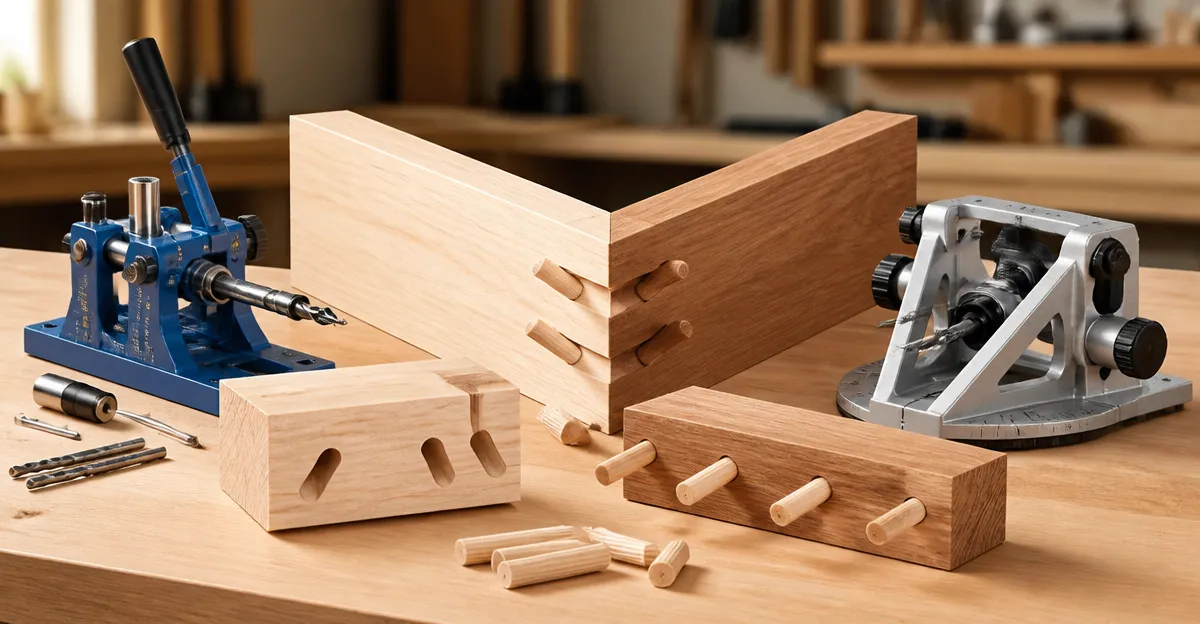
This guide explores the art and science of angled dowel joinery. Readers will learn foundational concepts, step‑by‑step techniques, and how to select the most suitable dowel jig for their projects. The discussion balances theoretical understanding with practical product recommendations. By the end of the article, one will be equipped to produce strong, precise angled joints in a variety‑consistent workshop environment.
Background and Context
Angled dowel joints are employed when two members intersect at a non‑right angle, such as in picture frames, chair legs, or decorative trusses. Unlike simple butt joints, angled joints distribute stress more evenly and provide superior mechanical strength. Accurate placement of dowels requires consistent hole spacing, precise alignment, and reliable clamping during drilling.
Traditional methods rely on marking gauges, hand‑driven drills, and temporary clamps, which can introduce cumulative errors. Modern dowel jigs address these challenges by offering self‑centering mechanisms, adjustable stops, and interchangeable bushings. Understanding the interaction between jig design and wood dimensions is essential for achieving repeatable results.
Understanding Angled Dowel Joinery
When two boards meet at an angle, the dowel must be inserted at a complementary angle to maintain alignment. The angle is typically measured from the face of one board to the face of the other. Accurate drilling demands that the jig be positioned so that the drill bit follows the intended path without slipping.
Key concepts include:
- Angle measurement: Use a digital protractor or a combination square to confirm the target angle.
- Dowel length: Select a dowel length that extends at least one‑third of the combined thickness of the members.
- Spacing: Maintain uniform spacing, commonly 1½ to 2 inches apart, to balance load distribution.
Self‑centering dowel jigs simplify these tasks by locking the boards in place and providing preset drilling paths. The following sections recommend specific jigs that excel in angled applications.
Selecting the Right Dowel Jig
Choosing a dowel jig depends on board thickness, desired angle, and workflow preferences. The table below compares five popular models based on price, construction material, clamp capacity, and dowel size compatibility.
| Product | Price (USD) | Construction | Clamp Opening | Dowel Sizes | Rating |
|---|---|---|---|---|---|
| Milescraft Joint Master | 39.99 | All‑aluminum body with hardened steel bushings | Standard (fits ½"‑3" boards) | ¼", 5/16", 3/8" | 4.7/5 (343 reviews) |
| Eleon Self‑Centering Dowel Jig | 49.99 | Aluminium alloy construction | Up to 6.7" opening | ¼", 5/16", 3/8" (included bushings) | 4.7/5 (331 reviews) |
| Milescraft DowelJig Kit | 21.99 | Handheld aluminum frame | Standard | ¼", 5/16", 3/8" | 4.5/5 (1,679 reviews) |
| Milescraft Joint Mate | 11.99 | Lightweight aluminum | Standard | ¼", 5/16", 3/8" | 4.5/5 (848 reviews) |
| Kreg Dowel Jig Kit | 49.97 | Steel frame with hardened steel guides | Standard | ¼", 5/16", 3/8" (compatible) | 4.2/5 (195 reviews) |
For angled joints that require a wide clamping range, the Eleon model offers the largest opening. Woodworkers who prioritize portability and budget may prefer the Milescraft Joint Mate. Professionals seeking robust construction and built‑in edge stops will benefit from the Milescraft Joint Master.
Step‑by‑Step Technique for Angled Joints
- Measure and Mark the Angle
Use a protractor to set the desired angle on one board. Transfer the angle to the second board by aligning a straight edge with the first board’s edge and marking the intersecting line. - Select the Appropriate Dowel Jig
For angles greater than 45°, the Eleon Self‑Centering Dowel Jig provides extra clamp width, ensuring stable positioning. For typical 30°‑45° angles, the Milescraft Joint Master delivers precise edge stops. - Install the Correct Bushing
Choose the bushing that matches the dowel diameter you intend to use. Hardened steel bushings in the Joint Master and DowelJig Kit guarantee long‑lasting accuracy. - Set the Jig on the Boards
Place the jig so that the edge stops rest against the board edges. Tighten the self‑clamping mechanism; no additional clamps are required with the Joint Master. - Adjust Depth Stops
Set the depth stop to the dowel length minus a small clearance (approximately 1/16"). This prevents over‑drilling and protects the dowel’s integrity. - Drill the Holes
Operate the drill at a moderate speed, allowing the bushing to guide the bit. The ruler markings on the Eleon jig assist in maintaining consistent spacing between dowels. - Assemble and Glue
Insert dowels, apply wood glue, and clamp the joint until the adhesive cures. Verify alignment by checking the angle with a square.
Following these steps yields a joint that resists shear forces and maintains the intended geometry. The self‑centering features of the recommended jigs reduce cumulative error, especially when multiple dowels are required.
Integrating Jigs into Your Workflow
Effective workshop organization incorporates the dowel jig as a central tool rather than an occasional accessory. Store the jig on a dedicated shelf to prevent damage to the aluminum or steel components. Periodically clean the bushings with a soft brush to remove sawdust, which can affect drilling precision.
When switching between projects, recalibrate the jig’s edge stops to match the new board thickness. The removable clamp on the Milescraft Joint Master allows users to replace it with a custom clamping solution for unusually large panels.
Consider maintaining a spare set of dowels in the same size range as the jig’s bushings. The Eleon kit includes dowels, enabling immediate project kickoff without additional inventory.
Comparison and Selection Guide
The decision matrix below assists readers in matching product attributes to project requirements.
- Budget‑Conscious Hobbyist: Choose the Milescraft Joint Mate at $11.99. It provides essential self‑centering capability with minimal expense.
- Professional Woodworker Requiring Wide Clamp: The Eleon Self‑Centering Dowel Jig, priced at $49.99, offers an opening up to 6.7" and elongated jaws for superior grip on thick stock.
- User Seeking All‑Metal Durability: The Milescraft Joint Master, at $39.99, combines aluminum construction with hardened steel bushings and built‑in edge stops for repeatable accuracy.
- Versatile Kit for Multiple Projects: The Milescraft DowelJig Kit, $21.99, includes three bushing sizes and depth stops, making it suitable for a range of board thicknesses.
- Commercial Cabinet Maker: The Kreg Dowel Jig Kit, $49.97, delivers removable drill guides and a robust steel frame designed for high‑volume production.
Readers should weigh factors such as clamp opening, material durability, and included accessories against their specific workflow. The table and bullet points provide a clear framework for this evaluation.
Best Practices & Tips
- Always test the jig on a scrap piece before committing to the final workpiece.
- Use a sharp, high‑speed steel drill bit that matches the bushing diameter to reduce heat buildup.
- Apply a thin film of wax to the dowel surface to ease insertion and reduce wood swelling.
- When drilling at steep angles, support the workpiece on a stable surface to prevent movement.
- Record the dowel spacing pattern for future reference; consistency improves structural integrity.
Frequently Asked Questions
- Can a dowel jig be used for mortise‑and‑tenon joints?
- While a dowel jig excels at creating straight dowel holes, it is not intended for mortise cuts. For mortise‑and‑tenon work, a dedicated mortising machine or hand tools are recommended.
- What is the maximum board thickness the Milescraft Joint Master can accommodate?
- The Joint Master accepts boards from ½" up to 3" thick, thanks to its adjustable drill blocks and built‑in scales.
- Do I need separate clamps when using the Eleon jig?
- No. The self‑centering design and extra‑large clamping opening secure the workpiece without additional clamps.
- How often should the bushings be replaced?
- With normal workshop use, the hardened steel bushings retain accuracy for several years. Replace them only if wear or damage is visible.
- Is glue necessary if dowels are tightly fitted?
- Glue enhances joint strength and fills microscopic gaps. Even with a snug dowel fit, adhesive is recommended for most structural applications.
- Can I use the Kreg jig for angled joints?
- Yes, but the Kreg kit does not include a dedicated angled guide. Users must manually set the angle and verify alignment with a square.
Conclusion
Angled dowel joinery combines geometric precision with mechanical strength, making it a valuable technique for a wide range of woodworking projects. By understanding the underlying principles, selecting an appropriate jig, and following a disciplined step‑by‑step process, one can achieve joints that are both aesthetically pleasing and structurally sound. The product recommendations presented herein align with specific workflow needs, ensuring that readers can invest confidently in tools that enhance their craftsmanship.
Products Featured in This Guide
Milescraft Joint Master
Price: $39.99 | Rating: 4.7/5 (343 reviews)
Featured for its all‑aluminum construction, built‑in edge stops, and compatibility with ¼", 5/16" and 3/8" dowel pins, making it ideal for precise angled joints.
Eleon Self‑Centering Dowel Jig
Price: $49.99 | Rating: 4.7/5 (331 reviews)
Featured for its extra‑large clamping opening of up to 6.7", elongated jaws, and ruler markings that simplify angled dowel placement on wide stock.
Milescraft DowelJig Kit
Price: $21.99 | Rating: 4.5/5 (1,679 reviews)
Featured for its handheld design, hardened steel bushings, and depth stops that support quick, accurate doweling on boards from ½" to 1½" thick.
Milescraft Joint Mate
Price: $11.99 | Rating: 4.5/5 (848 reviews)
Featured for its affordability, adjustable fence, and metal bushings that enable precise angled dowel joints on thinner lumber.
Kreg Dowel Jig Kit
Price: $49.97 | Rating: 4.2/5 (195 reviews)
Featured for its removable drill guides, hardened steel construction, and versatility in both home and professional cabinetmaking environments.