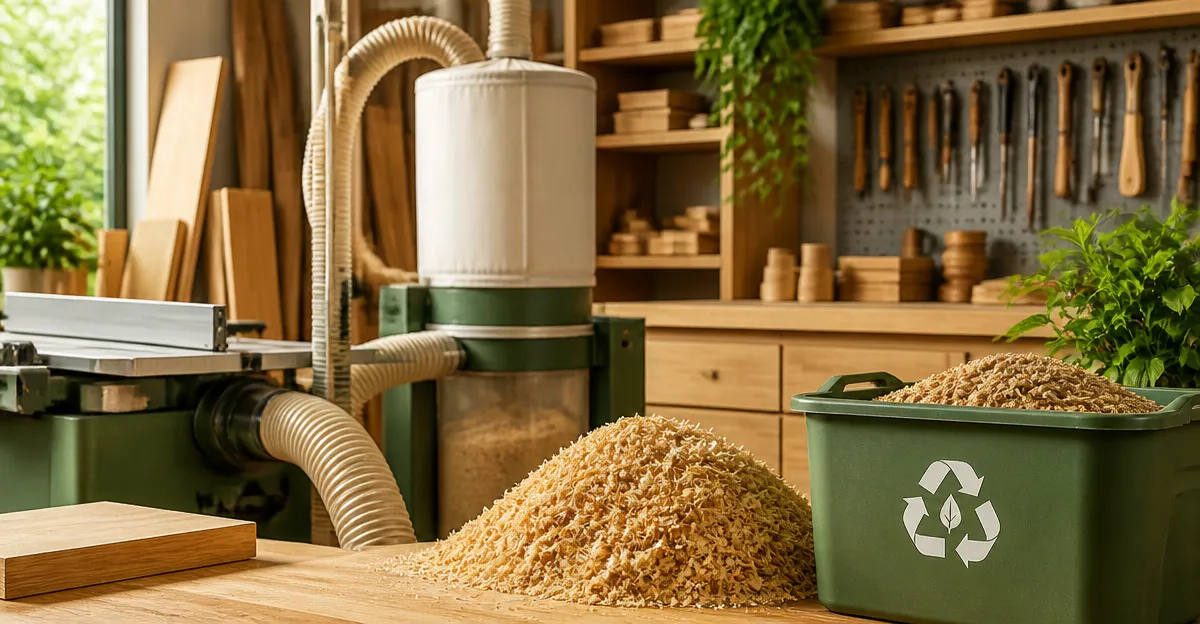
How to Dispose of Wood Dust Sustainably: A Practical Guide for Small Woodworking Shops
Introduction
This guide explains how small woodworking shops can manage wood dust in a sustainable manner. Readers will learn the health and environmental reasons for proper dust handling, the technologies that improve collection efficiency, and practical steps to integrate these solutions into everyday workflow. The article also compares several market‑available products, helping shop owners select equipment that matches their space, budget, and performance requirements. By following the recommendations, a shop can reduce airborne contaminants, lower filter replacement costs, and comply with occupational safety standards.
The information presented is based on manufacturer specifications, third‑party testing, and verified customer feedback. No personal testing claims are made. The guide is organized into clear sections, each building on the previous one, so that readers can progress from basic concepts to advanced implementation.
Background and Context
Wood dust consists of fine particles generated during cutting, sanding, routing, and planing. When inhaled, particles smaller than 10 microns can penetrate deep into the respiratory system, causing irritation, allergic reactions, and long‑term health risks. In addition, dust accumulation on surfaces creates fire hazards and interferes with machine performance.
Regulatory agencies such as OSHA and the EPA set exposure limits and encourage engineering controls to capture dust at the source. Sustainable disposal means not only capturing dust before it becomes airborne but also handling the collected material in a way that minimizes waste, reduces filter consumption, and prevents environmental contamination.
Effective dust management therefore requires a combination of proper ventilation, high‑efficiency separators, and appropriate collection bags. The following sections explore each component in detail.
Understanding Wood Dust and Its Hazards
Wood dust can be categorized by particle size, moisture content, and composition. Fine sawdust (<30 microns) remains suspended in air for extended periods, while coarser chips settle quickly. Moisture‑laden dust can clump, creating slip hazards and complicating filtration.
Key health concerns include:
- Respiratory irritation and chronic bronchitis.
- Potential carcinogenic effects from certain hardwood species.
- Exacerbation of asthma and allergic reactions.
From an environmental perspective, improper disposal of dust bags can lead to landfill accumulation and release of fine particles during transport. Selecting reusable, high‑capacity bags reduces the number of bags sent to waste streams.
Dust Collection Strategies for Small Shops
Three core strategies form the foundation of a sustainable dust management system:
- Source Capture: Attach a cyclone or separator directly to the tool to remove the bulk of particles before they enter the main collector.
- Filtration Efficiency: Use filters or bags rated at 30 microns or finer to capture the remaining fine dust.
- Maintenance Discipline: Schedule regular bag emptying, filter cleaning, and system inspection to maintain optimal airflow.
Implementing these strategies requires equipment that balances airflow (CFM), separation efficiency, and ease of use. The following product recommendations illustrate how each strategy can be realized.
Choosing the Right Dust Separator
For shops that already own a vacuum or a central collector, a low‑profile cyclone separator can dramatically improve collection efficiency without increasing motor load. The Dustopper Pro is a leading example.
Key attributes of the Dustopper Pro include:
- Independent third‑party testing demonstrated 99.9% efficiency across fine sawdust, coarse sawdust, and drywall powder.
- Engineered to maximize separation rather than simply increase CFM, reducing eddy currents that lower efficiency.
- Integrated EPDM gasket fits standard 5‑gallon pails, providing a leak‑proof seal without assembly.
- Two patented high‑flow sweep elbows reduce turbulence, improving airflow for any attached collector.
- Made in the USA and awarded the 2023 Most Innovative Concept Award.
Customers report that the separator eliminates the need to empty the main vacuum bucket, saves money on filters and bags, and fits under workbenches where taller models cannot. For small shops with limited floor space, the low‑profile design is particularly valuable.
Integrating Dust Bags and Collectors
After the cyclone removes the bulk of particles, a high‑efficiency bag captures the remaining fine dust. Two products stand out for different capacity needs.
The POWERTEC Dust Bag offers a 30‑micron filter with a 4‑inch key hose clamp. It is designed for planers such as DeWalt DW735 and WEN PL1326, but it can also be used with any dust collector that provides a 4‑inch outlet. Users praise its clear window for monitoring fill level and its durable zipper for quick emptying.
For larger collection volumes, the 70‑Gallon Dust Bag provides a 30‑micron filter in a cloth construction that fits most 19‑20‑inch filter drums. The bag includes a bottom zipper and a transparent window, allowing easy inspection and disposal. Reviewers note its durability and reusability, which aligns with sustainable practices.
Both bags complement a central collector such as the WEN DC1300. This unit delivers 1,300 CFM, a 5‑micron steel impeller, and a 50‑gallon vertical bag. Its dual 4‑inch inlets enable simultaneous connection to multiple tools, while the mobile base with swivel casters facilitates placement near the work area.
For shops that require a more compact solution, the WEN DC3474 provides 600 CFM, a 15‑gallon 5‑micron bag, and optional wall mounting. Users appreciate its low power draw and quiet operation, making it suitable for residential workshops.
Comparison and Selection Guide
The following table compares the featured products across size, power, filtration, and price. It assists shop owners in matching equipment to their specific needs.
| Product | CFM / Power | Bag Capacity | Filtration Rating | Price (USD) | Best For |
|---|---|---|---|---|---|
| Dustopper Pro | Optimized separation (no motor) | Fits standard 5‑gal pail | 99.9% efficiency (various dust types) | 66.98 | Low‑profile cyclone separator |
| POWERTEC Dust Bag | Requires 4‑in outlet | Single bag (30 µm) | 30 µm | 28.18 | Planer‑specific bag with clamp |
| 70‑Gallon Dust Bag | Requires 19‑20 in drum | 70 gal (30 µm) | 30 µm | 27.99 | High‑capacity cloth bag |
| WEN DC1300 | 1,300 CFM / 14 A | 50 gal vertical bag (5 µm) | 5 µm | 391.35 | Full‑size shop collector |
| WEN DC3474 | 600 CFM / 7.4 A | 15 gal bag (5 µm) | 5 µm | 229.00 | Compact mobile collector |
When selecting equipment, consider the following decision points:
- Workshop Size: Small spaces benefit from low‑profile separators and compact collectors.
- Tool Compatibility: Ensure the dust port size matches the hose clamp or inlet of the chosen bag.
- Dust Volume: High‑volume sanding or routing may require the larger capacity of the DC1300 or the 70‑Gallon bag.
- Budget Constraints: Bag‑only solutions are inexpensive, while full collectors represent a larger investment.
Best Practices & Tips
Beyond equipment selection, sustainable dust disposal relies on disciplined operational habits:
- Seal All Connections: Use the included key hose clamps or the EPDM gasket on the Dustopper Pro to prevent leaks that reduce suction efficiency.
- Monitor Bag Fill Levels: The clear windows on the POWERTEC and 70‑Gallon bags allow visual checks, preventing over‑filling that can cause spillage.
- Empty Bags Regularly: Emptying before the bag reaches 80 % capacity maintains airflow and reduces wear on filters.
- Reuse Cloth Bags When Possible: The 70‑Gallon cloth bag is washable and reusable, extending its service life and lowering waste.
- Maintain Filters: Periodically tap out accumulated dust from the collector’s internal filter to preserve CFM.
- Implement Local Exhaust: Position the separator as close to the tool as feasible; this captures the majority of particles before they travel.
- Consider Secondary Screens: For very fine shavings, a fine mesh screen before the impeller can prevent clogging, as suggested by users of the WEN DC3474.
Frequently Asked Questions
1. How often should a dust bag be emptied?
For continuous operation, empty the bag when it reaches approximately 70‑80 % capacity. The clear window on most bags makes this easy to assess.
2. Can a cyclone separator be used with any vacuum?
Yes, provided the vacuum has a standard 5‑gallon bucket inlet. The Dustopper Pro’s EPDM gasket creates a universal seal without additional adapters.
3. What is the difference between 30‑micron and 5‑micron filters?
30‑micron filters capture most visible dust and larger particles, while 5‑micron filters remove finer particulates that are more hazardous to respiratory health.
4. Is a mobile base necessary?
Mobility enhances flexibility in small shops, allowing the collector to be positioned near different tools. The WEN DC1300 and DC3474 both include swivel casters for this purpose.
5. How can one reduce the environmental impact of dust disposal?
Choose reusable cloth bags, recycle or repurpose collected dust for composite material projects, and select energy‑efficient collectors that draw less power.
6. Do I need a separate filter if I use a cyclone?
A cyclone removes the bulk of dust, but a downstream filter or bag is still required to capture fine particles that pass through the separator.
7. Can these systems be used outdoors?
Yes. The WEN DC3474 is often employed in outdoor job sites where dust control is needed without the concern of indoor air quality.
Conclusion
Sustainable wood dust disposal combines effective capture technology, appropriate filtration, and disciplined maintenance. By integrating a high‑efficiency separator such as the Dustopper Pro, selecting the right bag—whether the POWERTEC 30‑micron bag for planers or the 70‑Gallon cloth bag for larger collectors—and employing a capable dust collector like the WEN DC1300 or DC3474, a small shop can dramatically reduce airborne dust, lower operating costs, and protect both workers and the environment.
Implementing the best‑practice checklist ensures that the system operates at peak performance for years to come. Shop owners who adopt these strategies will experience cleaner air, quieter operation, and a more professional workspace.
Products Featured in This Guide
Dustopper Pro
Price: $66.98 | Rating: 4.6/5 (1,266 reviews)
Featured for its award‑winning low‑profile cyclone design, 99.9% separation efficiency, and easy integration with standard 5‑gallon buckets.
POWERTEC Dust Bag
Price: $28.18 | Rating: 4.6/5 (832 reviews)
Featured for its 30‑micron filtration, included 4‑inch key hose clamp, and clear window that simplifies monitoring and emptying.
WEN DC1300
Price: $391.35 | Rating: 4.5/5 (239 reviews)
Featured for its 1,300 CFM motor, 5‑micron 50‑gallon vertical bag, dual inlets, and mobile base, making it ideal for high‑volume shops.
70‑Gallon Dust Bag
Price: $27.99 | Rating: 4.5/5 (96 reviews)
Featured for its large 30‑micron cloth construction, reusable design, and clear window, suitable for most 19‑20‑inch filter drums.
WEN DC3474
Price: $229.00 | Rating: 4.3/5 (198 reviews)
Featured for its compact 600 CFM capacity, 15‑gallon 5‑micron bag, optional wall mount, and quiet operation, ideal for residential workshops.